Most people buy an umbrella policy because someone told them to, then file it away without ever reading what it does. That is a problem, because an umbrella policy is the personal policy most likely to be tested in a life-changing moment such as a multi-car wreck on Highway 6, a student tenant's guest falling off a second-story balcony, a dog bite in the front yard and it is also the policy most often misunderstood. Homeowners frequently assume it covers hail damage to their roof or their own hospital bills. It covers neither. Independent insurance agencies serving the Bryan Texas area hear that misunderstanding nearly every week.
The confusion matters more now than it used to. Medical costs, jury awards, and vehicle repair bills have all climbed, while the Texas minimum auto liability requirement still sits at 30/60/25. A single intensive-care admission can burn through $60,000 in days and anything above the policy limit becomes a personal problem with wages, savings, investment accounts, and rental property equity all fair game in a judgment.
This article breaks down what a personal umbrella insurance actually pays for, what it flatly excludes, what underlying limits a carrier will require, how household members and scheduled exposures work, and which local risks around Bryan and College Station Texas tend to trigger claims.
What an Umbrella Policy Really Is
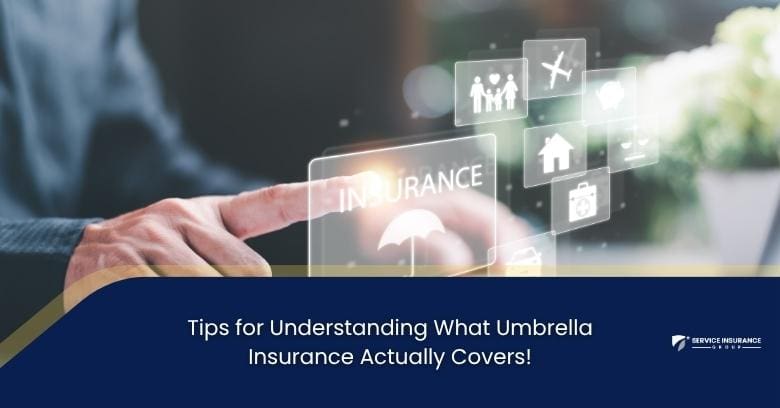
An umbrella is excess liability coverage. It sits on top of the liability sections of the auto, homeowners, boat, or landlord policies already in force and begins paying only after the underlying limit is exhausted. It is not a standalone shield or a replacement for primary coverage.
The Three Things It Pays For
- Bodily injury to others including medical bills, lost wages, and pain-and-suffering awards owed to someone else after an accident the insured is legally responsible for.
- Property damage to others including the three cars totaled in a chain-reaction collision, the neighbor's fence, or the structure a teen driver takes out.
- Personal injury offenses including libel, slander, invasion of privacy, false arrest, and similar claims which standard home policies cover narrowly or not at all.
That third category surprises people. A defamatory social media post by a teenager can generate a claim with no accident at all, which is why an insurance agency reviewing a family's household will ask about who lives there and who is online, not just who drives.
Defense Costs Usually Sit Outside the Limit
On most personal umbrella forms, legal defense is paid in addition to the policy limit rather than subtracting from it. That distinction carries weight as defending a disputed suit through depositions, experts, and trial can cost more than the eventual judgment. When comparing quotes, ask an insurance agency whether defense is inside or outside the limit before deciding on price alone.
What It Does Not Cover
An umbrella insurance policy pays for harm the insured causes to other people. It does not pay for the insured's own losses, which can trip up many households in a hail-prone market.
What is not covered? Roof or siding damage from hail, flood, the insured's own injuries, health care costs, auto physical damage, or theft. If a storm removes half the shingles on a house, the homeowners policy responds. The same applies to a hail-damaged truck, which is a comprehensive claim under the Texas Personal Auto Policy.
Standard exclusions also include business and professional pursuits, intentional or criminal acts, workers compensation, liability assumed under contract, aircraft, and most watercraft above a stated length or horsepower. Liability arising from an LLC, a working farm, or a side business belongs on a commercial umbrella policy, a separate product entirely. Blending the two is one of the fastest ways to end up with a denied claim and a good insurance agency will separate those exposures on paper rather than hoping one policy stretches.
One more gap worth naming is that excess uninsured and underinsured motorist coverage is usually not automatic. Where a carrier offers it, it has to be added by request, important in a state where a meaningful share of drivers carry minimum limits or none at all.
Underlying Limits: The Price of Admission
No carrier issues an umbrella over thin primary coverage. Requirements vary, but the common thresholds look like this:
- Auto liability of roughly 250/500/100 or 300/300, well above the 30/60/25 state minimum.
- Homeowners personal liability of $300,000 to $500,000.
- Landlord or rental dwelling liability at matching limits on every door owned.
- Watercraft and recreational vehicle liability on anything owned that moves under its own power.
If an underlying limit lapses or is reduced at renewal, the umbrella can still respond but only as though the required limit were in place, leaving the gap on the insured. This is a quiet failure point and one reason working with an independent insurance agency that holds all of the household's policies tends to be cleaner than scattering coverage across three unrelated insurance companies.
Scheduling matters just as much. Every licensed resident driver, every household member, and every owned exposure including rental houses, boats, ATVs, UTVs, horses, and dogs generally has to be listed. An unscheduled rental property is a coverage gap, not an assumption of coverage.
Local Exposures That Trigger Umbrella Claims
Student Rentals and Landlord Liability
Texas A&M enrollment runs north of 80,000 and many of those students live in houses owned by individuals rather than institutions. Plenty of families around Bryan Texas own one to four student rental doors. Landlord liability stacks quickly: stairs, balconies, pools, space heaters, and parties involving guests nobody screened. Each property needs its own underlying liability limit and its own schedule entry on the umbrella policy, which an insurance agency can confirm in a few minutes against the deed list.
Lease turnover on August 1 and August 15 makes a natural annual review date. New tenants, new vehicles, and newly licensed teen drivers cluster around the start of each semester and landlords in College Station often discover then that a property bought mid-year never made it onto the umbrella schedule.
Gameday, Traffic, and Social Host Risk
Seven Saturdays each fall, Kyle Field draws crowds of nearly 108,000 and traffic piles up on Texas Avenue, Highway 6, and Wellbord Road. Auto exposure spikes and so does host-liquor exposure. Under the Texas Alcoholic Beverage Code, serving alcohol to anyone under 18 creates social host liability, which makes tailgates and house parties a genuine concern for families with college-age children. Residents of College Station Texas who host regularly should treat umbrella limits as a game-day expense, not an abstraction.
Deer collisions run heavy from October through January and pool as well as trampoline season runs May through September, two more reasons local insurance experts push liability limits above the primary policy ceiling.
Rural Acreage and Recreational Exposure
Land in Brazos, Burleson, Washington, and McLennan counties brings ATVs and UTVs, hunting leases, livestock that occasionally find the road, and stock ponds. A cow on FM road pavement at dusk is a liability claim waiting to happen and an unlisted UTV ridden by a visiting nephew is exactly the kind of detail that surfaces after an injury. Clients near Caldwell, Brenham, and Waco should go over the property list with an insurance agency rather than assume rural equipment rides along on the home policy.
How Much to Buy and What Drives the Price
Common guidance is to carry limits at least equal to net worth plus some exposure for future earnings. Personal limits typically run from $1 million to $5 million, with high-net-worth programs reaching $10 million and above. Texas homestead and wage protections help, but they do not protect investment accounts, rental equity, business interests, or inherited property.
Nationally, the first $1 million of personal umbrella commonly runs somewhere in the $150 to $350 per year range, with each additional million typically adding roughly $75 to $100. Actual pricing depends on the household consisting of:
- Number of drivers under 25 in the home
- Number of rental homes owned
- Watercraft, horses, and recreational vehicles
- Prior at-fault claims or serious violations
- Number of residences
Because premiums move sharply with those factors, access to multiple markets matters. A locally owned independent insurance agency in Bryan Texas can shop the same household across many carriers, which is often the difference between a declination and a competitive quote for a family with two teen drivers and three rental houses.
A Quick Review Checklist
Before a renewal, it is worth confirming the following:
- Every licensed resident driver is listed on the policy, including students driving out of state.
- Every owned rental, boat, ATV, and trailer appears on the schedule.
- Underlying auto and home liability limits still meet the carrier's requirement.
- Excess uninsured and underinsured motorist coverage was offered and accepted or knowingly declined.
- Any self-insured retention, commonly $250 to $1,000 where the umbrella covers something the primary policy does not, is understood.
- Business, LLC, farm, and Airbnb activity has been disclosed and properly placed
Going over that list with an insurance agency annually takes less time than filing a single claim and it keeps the schedule current as households change. Insurance services built around an annual review tend to catch these gaps before a carrier does.
The Bottom Line
An umbrella insurance policy is narrow, powerful, and easy to misread. It pays for injury and damage the insured causes to others after the underlying limit has been exhausted and it pays nothing toward the insured's own roof, truck, or hospital bill. Its value shows up in scenarios that are statistically rare but financially unsurvivable including a serious wreck involving a student driver, a tenant's guest hurt at a rental property, or a defamation claim from a social media post. The coverage only works if the underlying limits are high enough and every driver, property, and toy is scheduled correctly, which is why the schedule deserves a fresh look each year rather than an auto-renew.
Households in Bryan and College Station Texas with rentals, teen drivers, acreage, or pools should request a personalized quote and have an independent insurance agency review the full picture before the next semester or football season adds exposure. Acting before a claim is the only version of this decision that is still available afterward!
Key Takeaways
- Umbrella coverage is excess liability only; it never pays for the policyholder's own hail, flood, roof, auto, or medical losses.
- Carriers generally require auto liability near 250/500/100 or 300/300 and homeowners liability of $300,000 to $500,000 before issuing an umbrella policy.
- Schedule every resident driver and every owned rental, boat, ATV, or similar exposure, or the claim may fall into a gap.
- Business, LLC, farm, and short-term rental liability needs a commercial umbrella, not a personal one.
- Excess uninsured and underinsured motorist coverage is usually optional and must be requested when available.
- A reasonable starting limit is net worth plus allowance for future earnings, with $1 million to $5 million being the common range.
Frequently Asked Questions
Does umbrella coverage follow my A&M student driving my car in another state?
Yes in most cases, as long as the student is a resident household member listed on the underlying auto policy. Confirm the household resident definition with the carrier, since students who establish independent residency can fall outside it.
Does it extend to my rental house and my HOA board seat?
Rental properties are covered only if they are scheduled and carry the required underlying liability limit. Volunteer board service may be covered under personal injury or a separate endorsement, so ask the carrier to confirm it in writing.
Are dog bites, pools, and trampolines covered?
Generally yes for liability to others, provided the home policy covers them first and the breed of the dog or features or pools and trampolines is disclosed. Some carriers exclude specific breeds or require fencing and gate hardware for pools.
I rent instead of own - can I still buy an umbrella policy?
Yes, renters can buy umbrella coverage over a renters policy and an auto policy. The carrier will still require qualifying underlying liability limits on both.
Does it cover my side business or Airbnb?
No, personal umbrella policies exclude business and professional pursuits. Short-term rental and side business activity belong on a commercial policy or a commercial umbrella policy.
Texas protects my homestead and wages - do I still need it?
Yes, because those protections do not shield investment accounts, rental property equity, business interests, or future assets. A judgment above policy limits can follow a defendant for years.